
Choose a region before a geometry
A forehead concept, a narrow brow-area piece and a round spot patch present different fit questions. Show the intended external placement on a face outline, then request the candidate patch outline at full scale. Mark any region your product must leave clear.
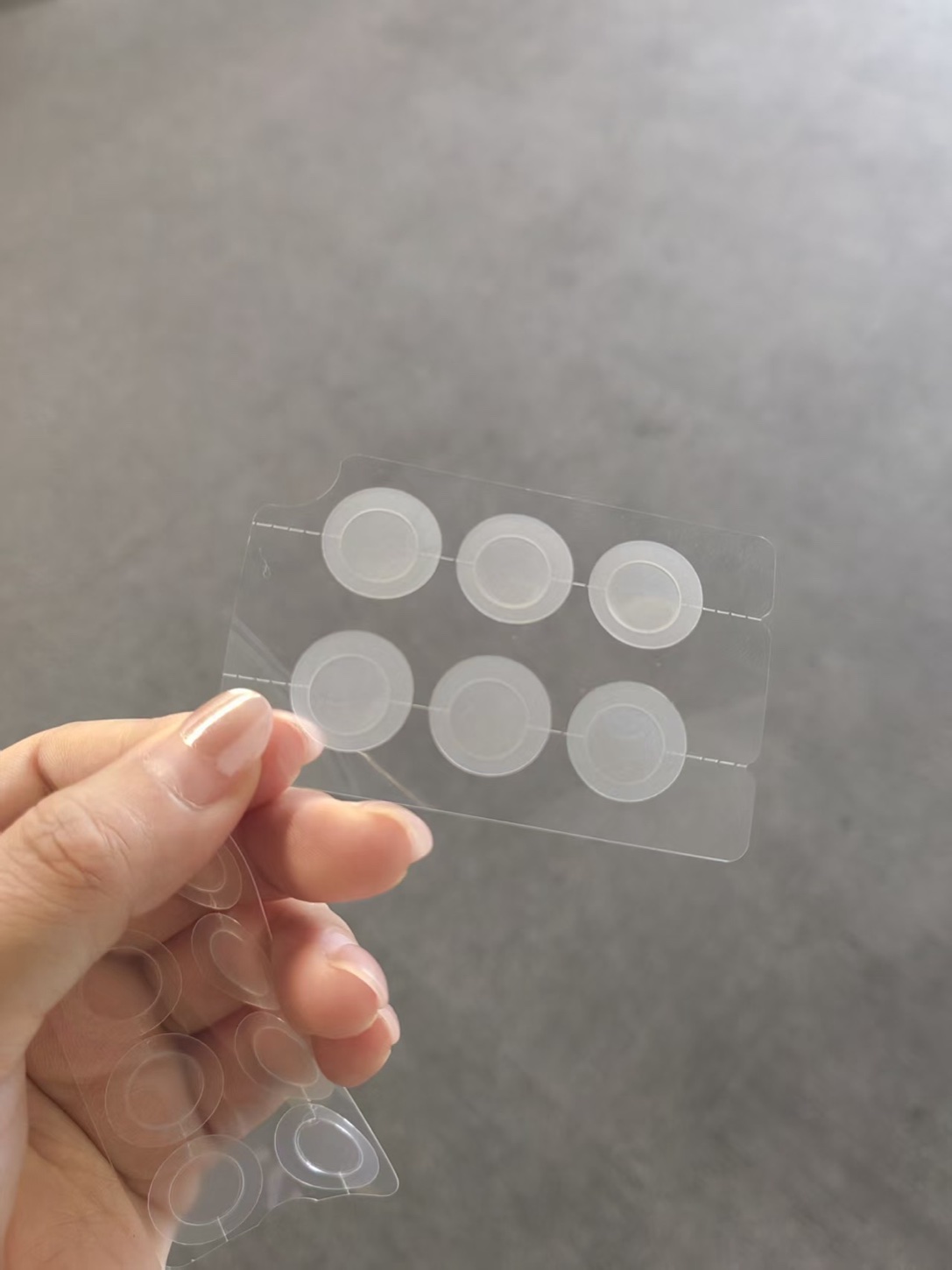
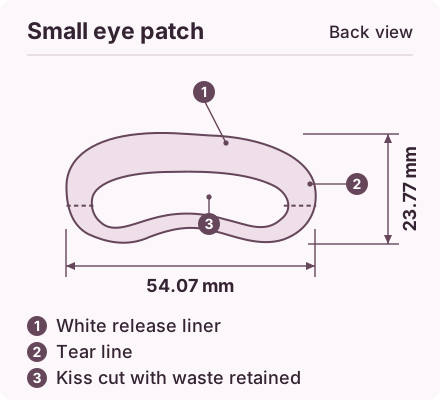
Look at the transition between field and border
A tapered end, sharp corner or narrow neck can affect how a sample is lifted and seated in a tray. Compare candidate outlines on the same printed scale. Ask where the needle field ends and where a purchaser or packer can handle the piece.
Decide whether an existing format is close enough
If the outline and pack fit the cosmetic brief, ask for the reference drawing and available sample route. If a shape is only illustrative, request a feasibility response before promoting it as an available SKU. A retailer can then review an actual proposal rather than an image alone.
Tie each proposed comparison to a facial landmark
A curved piece beside the mouth and a crescent beneath the eye may look similar on a white background. Add an outline of the intended facial region beside each sample drawing. Pruettijarai and colleagues studied the nasolabial fold, the line between the side of the nose and the corner of the mouth. A reference photo from that study should stay with that anatomical region. For an eye project, ask for an eye-area reference and a left and right piece diagram.
Pruettijarai et al. (2022) · A split-face nasolabial-fold study / Skin Research and Technology
Prepare your inquiry
Use the outlined area, usable border and package fit to narrow the shortlist.