
Trace the two boundaries
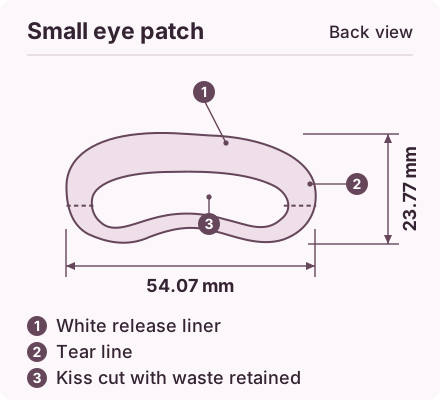
On a crescent drawing, the smooth border may extend around a much smaller textured field. Ask for both boundaries at the same scale. Confirm which portion of the patch a quoted coverage percentage describes, and whether it excludes a handling tab.
Separate count from coverage
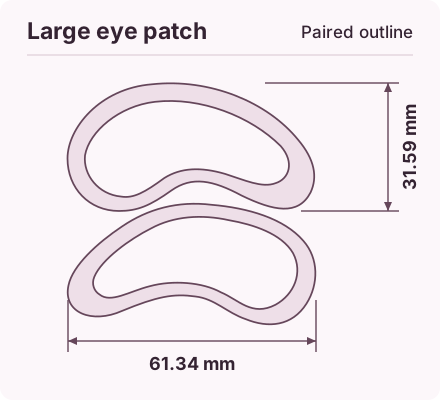
Needle count is a total for a specified piece or field. It does not describe the field area, spacing or the shape of its edge. When a supplier lists a count, request the drawing it belongs to and establish whether the number is per patch or per mirrored pair.
Verify the display against your sample
An illustration can help the artwork team explain which side faces the protective tray. Use the approved drawing and a sample image to check its orientation. Store the image revision beside the SKU so a later pack update does not reverse the diagram.
Count the features inside the specified outline
Two arrays can carry the same nominal count while putting the features in different places. When the supplier offers partial coverage, request one annotated plan showing the active field, the smooth handling margin and the side nearest the inner eye. Compare the field at the nose end and the temple end separately. A useful purchasing decision is whether the active outline fits the placement drawing. Counting points in a cropped catalogue photo cannot establish that fit.
HYTANBIO · Supplier illustrations of eye-patch configurations
Prepare your inquiry
Put the plain border and the needle-bearing zone on one drawing.