
Define the reference you want to keep
An existing reference format can keep the crescent outline and tray while the brand explores artwork. Ask for the exact reference number, drawing revision and sample configuration. Catalogue status alone does not establish availability, order minimum or compatibility with a new ingredient.
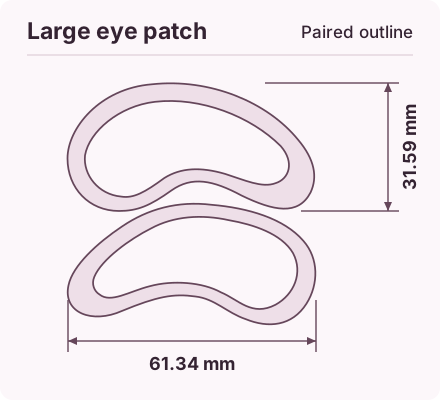
Mark the change on the drawing
A wider outer edge might change the die cut and tray while leaving the needle-bearing zone untouched. A new needle-zone outline raises a different engineering question. Mark each change on an annotated drawing so the supplier can identify the components and samples that need review.
Compare quotations with the same scope
Ask for separate lines for existing components, newly proposed tooling, sample work and packaging artwork. Record the assumptions behind order quantity and scheduling. A quote for an unprinted pair and a quote for a finished carton represent different purchasing decisions.
Change the cheapest decision first
A brand may want a shorter-looking crescent because the current sample appears crowded on the front of its box. Try the approved standard sample in a revised carton layout before ordering different tooling. If the difficulty is the actual end radius or the fit of the pair in its tray, mark that feature on the current drawing and ask for two quotes. One should retain the nearest existing outline and the other should identify the cost items and samples affected by the change.
HYTANBIO · Supplier illustrations of eye-patch configurations
Prepare your inquiry
Ask for the smallest set of changes that achieves the intended pack and fit.